

Shelby Township Dentist » Services » General Dentistry » Gum Disease Treatment
Gum Disease Treatment in Shelby Township, MI
Periodontal Treatment Serving Shelby Township, Macomb, Clinton Township, and Sterling Heights, MI
Gum disease is a bacterial infection of the tissue and bone that hold your teeth in place. Caught early as gingivitis it is reversible. Once it becomes periodontitis, treatment manages it rather than cures it. McKinley-Holloway Legacy Dentistry in Shelby Township treats it with deep cleaning, laser therapy, and ozone. Call (586) 685-0880.
Bleeding when you brush is not normal, and it is the symptom most people ignore longest. If your gums bleed, feel tender, or have started pulling away from your teeth, get it looked at before it costs you bone. Call (586) 685-0880 or book a periodontal evaluation. Same-day appointments are available.
Why Choose McKinley-Holloway Legacy Dentistry for Gum Disease Treatment?
Laser and Ozone, Not Just Scraping
Deep cleaning removes the bacteria and hardened deposits below the gum line. We add a soft tissue dental laser to treat infected tissue and an ozone generator that kills bacteria in the pockets a scaler cannot fully reach. Most practices offer the cleaning and stop there.
Caught Early Because You Are Screened Every Visit
Gum disease is painless until it is advanced, so it gets found at checkups, not reported by patients. Dr. McKinley-Holloway is the only dentist here and many patients have been with us for decades, so changes in your gums stand out. The practice holds 4.9 stars across 400+ Google reviews.
Numbing Built for Sensitive Gums
Scaling and root planing has a reputation, and it comes from the injection more than the cleaning. We use The Wand, a computer-controlled system that delivers anesthetic slowly and precisely, and laughing gas or oral conscious sedation is also available if you want it.
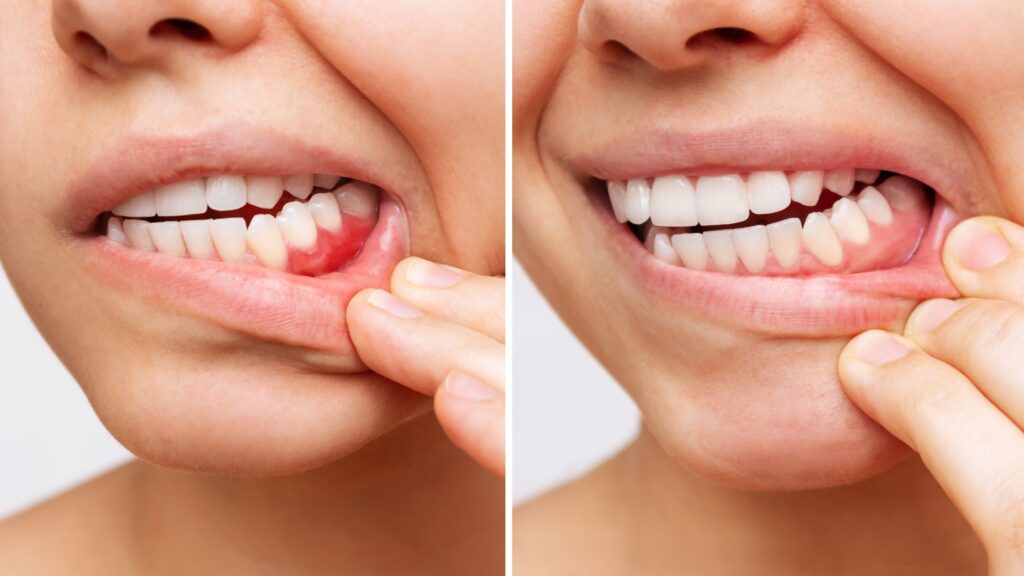
What Is Gum Disease?
Gum disease is a bacterial infection of the gums and the bone supporting your teeth. It has 2 stages: gingivitis, which is inflammation of the gums and is reversible, and periodontitis, which destroys bone and is permanent but manageable.
It starts with plaque. Bacteria form a film on the teeth within hours of brushing, and where that film sits along the gum line undisturbed it hardens into tartar, which brushing cannot remove. The gums respond to the bacteria with inflammation. That is gingivitis, and at this stage a professional cleaning and better home care can resolve it completely.
If it continues, the inflammation moves below the gum line. The gum detaches from the tooth and forms a pocket, bacteria colonize the pocket, and the body begins breaking down the bone holding the tooth. This is periodontitis. The bone does not grow back on its own, which is why the goal shifts from cure to control.
Roughly half of American adults over 30 have some form of periodontal disease, and most do not know it, because the early stages do not hurt.
What Are the Symptoms of Gum Disease?
The most common gum disease symptom is bleeding when you brush or floss. Others include red, swollen, or tender gums, persistent bad breath, gums pulling away from teeth, sensitivity at the gum line, and teeth that feel loose or have shifted.
Bleeding is the one people dismiss. Healthy gums do not bleed when you brush them, the same way healthy skin does not bleed when you wash it. If there is blood in the sink, something is inflamed.
By the time a tooth feels loose, significant bone is already gone. That is the stage where treatment becomes about saving what is left rather than reversing anything.
Signs of Gum Disease
- Gums that bleed when you brush or floss
- Red, swollen, or tender gums
- Persistent bad breath or a bad taste that does not go away
- Gums that have pulled back, making teeth look longer
- New sensitivity at the gum line
- Pus between the teeth and gums
- Teeth that feel loose or have shifted position
- A change in how your teeth fit together when you bite
- Partial dentures that no longer fit the way they did
What Does Periodontal Treatment Involve?
Periodontal treatment starts with scaling and root planing, a deep cleaning below the gum line performed over 1 or 2 visits. We add laser therapy and ozone to reduce bacteria, then move you to a 3 month maintenance schedule.
Scaling and root planing. Scaling removes plaque and tartar from the tooth surface and from inside the periodontal pockets. Root planing smooths the root surface so bacteria have less to cling to and the gum can reattach. The area is fully numbed, and most patients have this done in two visits, one side at a time.
Laser therapy. A soft tissue dental laser treats the infected lining of the pocket and reduces bacterial load in areas instruments cannot fully reach.
Ozone therapy. Medical-grade ozone is delivered into the pockets to kill bacteria. It is a step most general practices do not offer.
Periodontal maintenance. After treatment, cleanings move from every 6 months to every 3 months, because the pockets that formed will recolonize faster than healthy gums do. This is the part that determines whether treatment holds.
If disease has advanced past what deep cleaning can manage, surgical treatment may be needed. See oral surgery in Shelby Township.

Can Gum Disease Be Reversed?
Gingivitis is fully reversible with professional cleaning and consistent home care, often within 2 weeks. Periodontitis cannot be reversed, because lost bone does not regrow, but it can be stopped and managed indefinitely with treatment and 3 month maintenance.
That distinction is the whole reason to come in early. The window where this is a cleaning and a conversation is measured in months, and the window where it becomes a lifelong management problem opens quietly.
What you do at home decides most of it. Professional treatment resets the bacterial load, and daily brushing and flossing determines whether it comes back before your next visit. A water flosser helps significantly in pocketed areas.
4.9 stars, 400+ Google reviews

Is There a Connection Between Gum Disease and Other Health Problems?
Research links periodontal disease to diabetes, heart disease, stroke, and adverse pregnancy outcomes. The relationship with diabetes runs both ways: uncontrolled blood sugar worsens gum disease, and periodontal infection makes blood sugar harder to control.
The working explanation is chronic inflammation and bacteria entering the bloodstream through the pockets. This is an association documented across many studies rather than a proven cause-and-effect chain, and it is worth saying plainly rather than overstating.
What it means practically: tell us if you have diabetes, heart disease, or are pregnant, because it changes how closely we monitor you and how often we want to see you.
How Much Does Gum Disease Treatment Cost in Shelby Township, MI?
Scaling and root planing in the Shelby Township, Macomb, MI, Clinton Township, and Sterling Heights area generally runs about $200 to $400 per quadrant, so a full mouth typically falls between about $800 and $1,600. Periodontal maintenance cleanings cost more than a standard cleaning.
Dental insurance covers periodontal treatment more reliably than most procedures, because it is classified as necessary rather than elective. Coverage is commonly 50 to 80 percent after deductible. We verify your plan before treatment starts.
Without insurance, the Smile+ in-house dental plan has a Perio Plus tier built for exactly this situation. It covers periodontal maintenance every 3 months rather than cleanings every 6, at roughly $68 a month plus a one-time enrollment fee, with no waiting period.
CareCredit, Cherry, and LendingClub are available through our dental financing options.


Do You Treat Gum Disease for Patients From Macomb, Clinton Township, and Sterling Heights?
Yes. McKinley-Holloway Legacy Dentistry is at 45665 Village Blvd in Shelby Township, MI, and provides gum disease treatment for patients from Macomb, MI, Clinton Township, Sterling Heights, Washington Township, Utica, and Harrison Township.
Periodontal maintenance means coming in four times a year instead of two, so proximity matters more here than for most services. Patients traveling for gum disease treatment from Clinton Township, Macomb, MI, or Sterling Heights are generally 15 to 20 minutes out, and we open at 7 AM on Tuesdays and Wednesdays.
Gum health is checked at every visit through our preventive dentistry program, and advanced cases may involve dental implants if teeth are lost.
Bleeding Gums Are Worth an Appointment
Gum disease treatment at McKinley-Holloway Legacy Dentistry combines deep cleaning with laser therapy and ozone, performed by the only dentist in the practice. We are rated 4.9 stars across 400+ Google reviews and treat patients from Shelby Township, Macomb, MI, Clinton Township, Sterling Heights, Washington Township, Utica, and Harrison Township.
Call (586) 685-0880 or book a periodontal evaluation. Same-day appointments are available.

Gum Disease Treatment FAQs
Your gums are fully numbed first, then we remove plaque and tartar from below the gum line and smooth the root surfaces so the gum can reattach. Most patients have it done in two visits, one side of the mouth at a time. Expect some tenderness for a few days afterward and mild sensitivity to cold, both of which fade.
Gingivitis, the early stage, is fully reversible with a professional cleaning and consistent home care, often within two weeks. Periodontitis is not reversible, because the bone it destroys does not grow back. It can be stopped and managed indefinitely with deep cleaning and maintenance visits every three months.
The treatment itself should not hurt, because the area is fully numb. We use The Wand, a computer-controlled anesthesia system that delivers numbing medication slowly, which removes the sting of the injection. Laughing gas and oral conscious sedation are available. Most patients report tenderness for a few days afterward rather than pain during.
Bleeding gums almost always mean inflammation from bacteria along the gum line. Healthy gums do not bleed when brushed. Occasional bleeding from brushing too hard is different from gums that bleed every time, and the second one is the earliest sign of gum disease. It is worth an appointment rather than a wait-and-see.
Scaling and root planing in the Shelby Township, Macomb, Clinton Township, and Sterling Heights area generally runs about $200 to $400 per quadrant, so full mouth treatment typically falls between about $800 and $1,600. Dental insurance covers periodontal treatment more reliably than elective work, commonly at 50 to 80 percent. Our Smile+ in-house dental plan includes a Perio Plus tier with maintenance visits every three months.
Yes. Periodontal disease is the leading cause of tooth loss in adults, ahead of decay. It destroys the bone anchoring the teeth, and once enough bone is gone the tooth loosens and eventually fails. This is why the loose-tooth stage is late-stage, not early-stage, and why bleeding gums are worth acting on.
Every three months rather than every six. Periodontal pockets recolonize with bacteria faster than healthy gums, so the standard six month interval is too long to hold the result. This schedule is called periodontal maintenance, and staying on it is the single biggest factor in whether treatment holds.
The bacteria that cause gum disease can transfer between people through saliva, so sharing utensils or kissing can pass them along. That does not mean you will develop gum disease, because whether the bacteria take hold depends on your oral hygiene, genetics, smoking, and overall health. It does mean families often benefit from being evaluated together.
Significantly. Smoking restricts blood flow to the gums, which masks bleeding and hides the earliest warning sign, while also impairing healing after treatment. Smokers develop gum disease more often, more severely, and respond less well to treatment. Telling us you smoke changes how closely we monitor you.